
What Are Challenge Coins? Uses, Traditions and How They Are Made
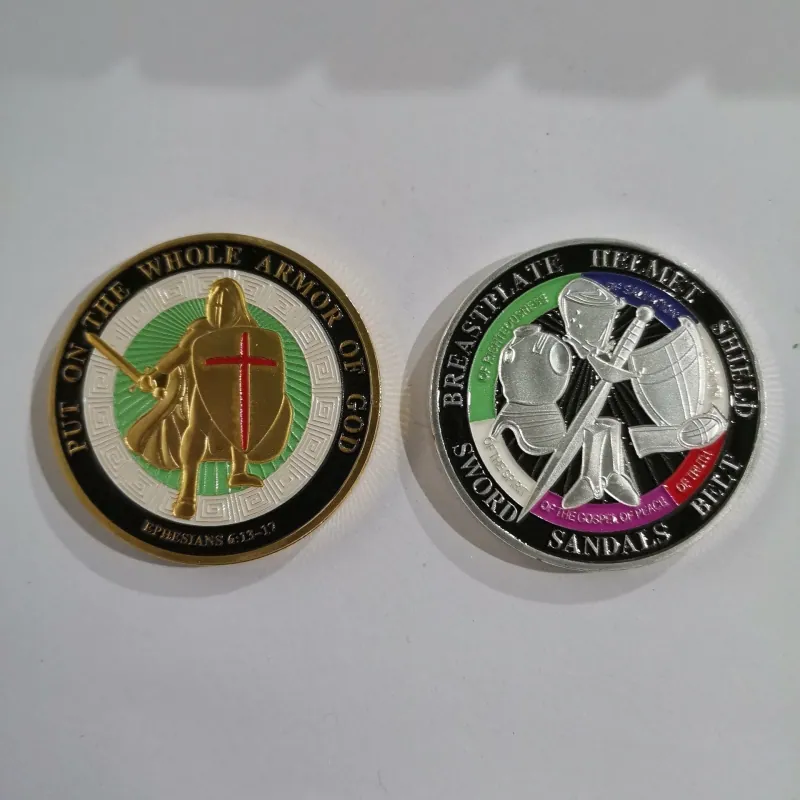
Challenge coins are small metal medallions, roughly the size of a large coin, struck with a design on one or both faces and handed out to mark belonging, service or a moment worth keeping. Most people meet the phrase through the challenge coin tradition: you carry your coin, someone calls the challenge, and anyone who cannot produce theirs buys the round. Strip out the bar stories and something simpler is left. A challenge coin is a piece of identity you can hold in your hand.
That is the short answer to the challenge coin meaning question too. It is not money. It is proof, a small object that says you were there, you served, you joined, you finished. Ask ten collectors and you will hear ten versions of the same story, usually ending with 'and I still have mine'.
What a challenge coin actually is
Pick one up and four things register: size, weight, front, back. Size usually lands in the fits a palm, sits in a jeans pocket range, though display coins for a shadow box or a desk get larger. Weight comes from the metal and the thickness of the blank. Zinc alloy gives you low cost and complicated shapes. Brass and copper feel denser and hold a crisp strike. Iron is the budget route. Stainless steel 304 or 316 turns up where corrosion resistance matters, say a coin that lives near water or in a humid climate.
Front and back are where the design work happens. A crest, a motto, a founding date, a map, a line from a speech, a badge number. One-sided coins exist and cost less, but a blank back is a wasted opportunity, and most buyers regret it later.
Then there is the edge. On a plain coin it is just the rim. On a good one it is a design decision, and it is the detail that makes people turn the coin over in their fingers.
Where the challenge coin tradition comes from
The written history is thinner than the storytelling. The Wikipedia entry on challenge coins notes that the exact origins are unclear, and that the popular accounts reach back to early military aviation in the First World War, with later chapters written by Special Forces units and, eventually, by everyone else. Treat the early details as folklore with a solid core.
What stays consistent across every version is the check. The coin has to be on you. Not in your bag, not in the car, not at home in a drawer. A challenge is called, coins come out, and whoever is empty handed pays a small penalty. The penalty itself varies by group. Some ask for a drink, some assign a chore, some just enjoy the noise.
If you are new to a unit, a club or a station, ask about the local rules before you challenge anyone. The tradition only works when everyone knows the shape of the game.
Who uses challenge coins today
Military units are still the heart of it, and veteran groups keep the habit alive long after service ends. Police and fire departments issue them for academy classes, promotions, retirements and fallen colleagues. Beyond that, the list has grown a lot:
- Companies: a coin for a product launch, a sales milestone or a first year on the team. It lands better than another branded mug.
- Sports clubs and race organisers: finisher coins, season coins, volunteer thank-yous. Race medals get worn once, a coin goes in a pocket.
- Events and conferences: speaker gifts, committee tokens, anniversary editions.
- Charities and recovery groups: milestone chips, sponsor recognition, donor tiers.
- Schools, bands and alumni: reunion coins, band camp coins, leavers gifts.
Custom challenge coins also work as retail items. Souvenir shops near a landmark, a stadium or a museum sell them to people who want something smaller and cheaper to carry than a figurine.
What makes a good coin
Two things sell a coin: how it reads across a room and how it feels in the hand. A design that only works when you are squinting at it from 20 cm is a design that will sit in a drawer.
Two sides, two jobs
Give the front one clear idea, usually a symbol or crest, and give the back the words and the detail. The mistake we see most often is putting everything on the front. A big logo, a long motto, a date, an address, a website. Then every element shrinks and none of them land. Pick one hero element per face and let the second face carry the story.
Edge and finish
Our technical notes list a long menu of cut edges: rope line, curve wave, petal, flat wave, oblique line, diagonal, grid, scale and diamond line. The cut edge usually runs about 1.8 mm wide. If you want the rim to read differently from the faces, the edge is cut as the very last process, so it stays a different colour from the plated body. There is a catch. A cut edge needs a regular outline, round or square or similar. Wild irregular silhouettes and a diamond cut rim do not mix, so decide the shape early.
Plating does the rest: gold, nickel, copper, bronze, antique or satin. Antique finishes settle into the recesses and make detail pop. Bright gold looks ceremonial. Nickel looks modern and holds up well.
| Decision | Common options | What it changes |
|---|---|---|
| Face layout | Same design both sides, different design each side, one side blank | Cost, and how the coin reads when someone picks it up |
| Metal | Zinc alloy, brass or copper, iron, stainless steel | Weight, sharpness of detail, unit price, corrosion resistance |
| Colour process | Hard enamel, imitation hard enamel, soft enamel, UV print, no colour | Surface feel, brightness, production time |
| Plating | Gold, nickel, copper, bronze, antique, satin | The look of every raised metal area |
| Edge | Plain, rope line, wave, petal, diamond line, grid, scale | Silhouette and how it catches the light |
| Size and shape | Round, square, rectangular, custom outline | Price per piece, and whether a cut edge is possible |
How custom challenge coins are made
Two routes cover most orders. Stamping presses a design into a metal blank with a die, which is the classic route for brass and copper coins with crisp relief (the stamping process is worth a read if you like the mechanics). Die casting pours molten zinc alloy into a mould, which handles deeper 3D shapes and undercuts that a stamp cannot reach. The die casting entry explains the principle. Ask your supplier which one suits your artwork instead of assuming.
In our workshop the route runs through twelve steps: artwork, mould tooling, stamping or pressing or die casting, a high precision press, cutting the shape by laser or hydraulic press, fixing attachments, polishing, plating, colouring, baking, QC and packing, then shipping. You can see the full sequence on our process page.
Colour work is where the labour sits. Hard enamel is filled by hand, one colour at a time, and fired between fills, which is why the surface ends up flat and polished. Soft enamel is filled and baked, so the metal ridges stay raised and the coin has texture. Imitation hard enamel sits between the two on cost and gets close on looks. UV printing suits gradients and photo detail, and it needs a protective coat.
We have been making metal crafts for more than 40 years, with our own plating line and pollution treatment systems, and the factory holds a Green Label Enterprise rating from the local government. We are also a SEDEX member (4-Pillar), and our factory has been audited by brands such as Disney and NBC.
Artwork: what to send
Send vector files if you have them. Adobe Illustrator or CorelDRAW are the formats our team prefers, with colours specified in Pantone Solid Coated. A JPG of a crest pulled off a website will usually need redrawing, which adds a day and some guesswork. If that is all you have, send the highest resolution version and let the design team rebuild it. We do that work free of charge.
Also tell us the size, the metal you have in mind, whether you want colour on both sides, and roughly how many pieces. Those four answers shape everything else. There is a longer walkthrough on how to design a challenge coin if you want to brief a designer properly.
Cost, timing and what moves the price
Price per coin is driven by size, metal, number of colours, whether both sides are coloured, the edge treatment and the quantity. A one-colour, one-sided iron coin and a two-sided brass coin with five hard enamel colours are not in the same conversation. Packaging matters too: a poly bag is nearly free, a printed gift box is not.
Sampling usually takes 3 to 8 days, and production runs 7 to 15 days depending on the item. Reorders of the same design skip the mould fee, because we keep moulds for two years. For a fuller breakdown of the numbers, read our post on challenge coin cost.
How to start an order with us
Send your artwork, quantity and deadline to order@ty-gifts.com, or message +86 181 2281 1289 on WhatsApp. You can also use the form on our contact page. A sales rep replies within 8 hours, and our team is online 24 hours a day.
From there you get a free design proof, a quote and a sample schedule. Low MOQ is our default position: custom orders are accepted regardless of order size, so a 50 piece club run is as welcome as a 5,000 piece event order. Bulk pricing improves with volume, and if you become a VIP customer you get the latest samples with each shipment, distributor pricing and priority production. We take T/T, L/C and PayPal.
Have a look at the custom challenge coins we make, including die struck styles, enamel coins and stamped brass pieces, then tell us which direction feels right. One clear idea per face, a shape you love, and a deadline. That is enough to start.
Frequently asked questions
What is the challenge coin meaning?
It is a token of belonging. The coin itself has no cash value, but it proves you were part of a unit, a team, a class or an event. The meaning comes from the check: carry your coin, get challenged, produce it, and you are in. Fail, and you pay a small penalty set by the group.
Are challenge coins real money or legal tender?
No. They are medallions, not currency, and they carry no face value. Some commemorative coins copy the look of currency for design reasons, but they cannot be spent. Think of them as small metal badges with two decorated faces.
Can I order a small batch of custom challenge coins?
Yes. Our low MOQ policy means custom orders are accepted regardless of order size, so small club runs are fine. Unit price drops as quantity rises, so it is worth asking for quotes at two or three quantities before you commit.
How long does a custom challenge coin order take, and do you keep the mould?
Samples usually take 3 to 8 days and production 7 to 15 days depending on the item. We keep moulds for two years, and reorders of the same design carry no mould fee.