
How Much Do Challenge Coins Cost? The Factors That Set the Price
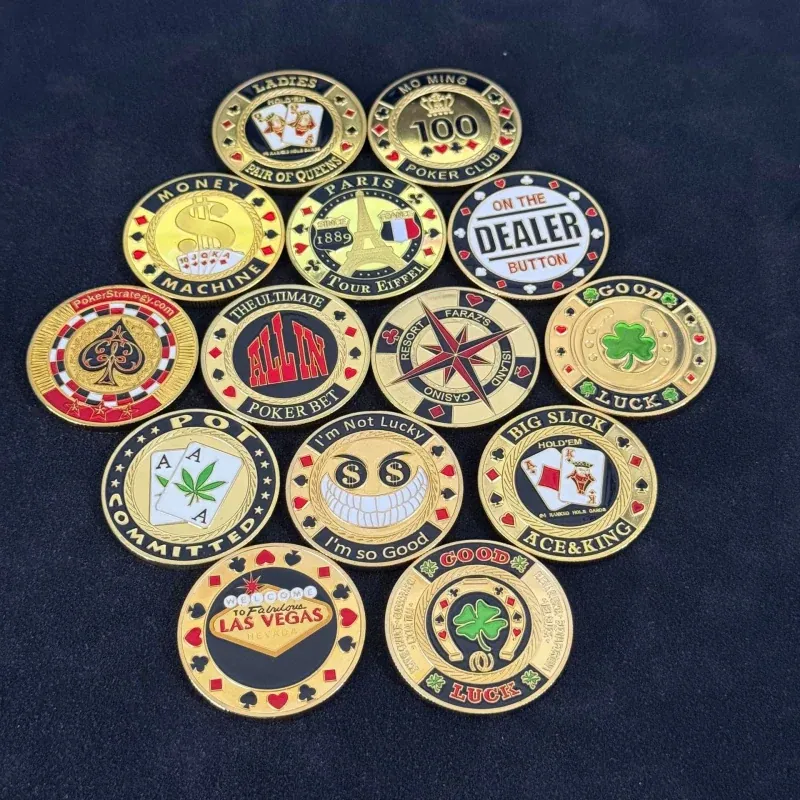
If you are building a budget for a unit, a race series or a club anniversary, the honest answer to how much do challenge coins cost is: it depends, and anyone who quotes a flat number before seeing your design is guessing. Challenge coins cost is built from a spec sheet, not read off a catalogue page. Change one line on that sheet, say the colour count or the plating, and the number moves. The useful skill is knowing which lines move it most.
The five minute version
Cheap coins are small, flat, single sided, iron or zinc alloy, soft enamel in two or three colours, one plating, packed in a poly bag, ordered in volume. Expensive coins are large, thick, double sided, die struck brass or die cast 3D, hard enamel in six or eight colours, antique or two-tone plating, with a custom cut edge and a printed gift box. Everything between those two ends is a trade-off you choose, not a mystery.
So the real question is not "what do coins cost". It is "what does my coin cost, at my quantity, with my artwork". Two buyers can order the same diameter and pay very different prices per piece. That is normal in this trade.
Size and thickness: the first thing your supplier asks
Metal is sold by weight and machined by area, so size drives cost before anything else does. A wider coin needs a bigger blank, a bigger die or mold, more polishing time and a bigger enamel surface to fill. Thickness works the same way: more metal, more pressing force, more finishing.
For reference, coins we have produced include a 4 x 4 x 0.3 cm piece (the Armor of God challenge coin) and a 4 x 3 cm piece (the Vintage Enamel Four Seasons coin). Both are customisable, and both sit in the pocket-sized range most buyers want. Going bigger than that is fine. It just costs more per unit, and it also costs more to ship.
Practical tip: decide the diameter first, then decide whether you need real 3D relief or a flat 2D face. That single choice often settles half the budget conversation.
Metal: zinc alloy, brass, copper, iron or stainless
Our standard metal options are zinc alloy, copper, brass, bronze, iron and stainless steel 304 or 316. They behave differently in production and they price differently.
- Zinc alloy (often called Zamak) is cast rather than struck. It flows into complex shapes, holds deep 3D relief well, and is usually the economical route for sculpted designs.
- Brass and copper feel heavier and strike crisply. They cost more as raw metal, which shows up in the unit price, but they are the classic choice for a coin people keep for twenty years. See custom stamped brass coins.
- Iron is the budget option. It stamps and plates well, though it needs care in finishing, and our technical notes are blunt about the trade-off: iron is cheaper partly because it skips polishing time. If a magnet sticks to your sample, you are holding iron.
- Stainless steel 304 or 316 is hard and corrosion resistant, which suits outdoor and marine-themed coins.
Die struck or die cast 3D
These are two different production routes, and they are not interchangeable. Die striking presses a design into a metal blank with a hardened die: sharp lines, tight lettering, a dense feel. Die casting pours molten zinc alloy into a mold, which is how you get a sculpted eagle, a raised unit crest or a coin with a genuinely three dimensional face. We break the differences down in die struck vs die cast, and you can see the struck version on the die struck challenge coins page.
A 3D coin almost always costs more than a 2D coin of the same size. The mold takes longer to cut, the casting cycle is slower, and hand finishing on a sculpted surface takes more time. If your budget is tight, keep the 3D effect on one face only.
Colours: every enamel colour is another step on the line
This is where buyers are most often surprised. Colours are not printed on a coin in one pass. Each enamel colour is filled separately, and hard enamel is fired one colour at a time, then polished flat so the metal and enamel sit level. That labour is the reason hard enamel costs more than soft enamel, and our workshop notes say it plainly: the complex procedure, the skill and the time are what you are paying for.
So count your colours before you approve artwork. Three colours will beat seven. If a design can lean on the plating for gold lines, silver areas or a metallic background, do that instead of specifying another enamel fill. Soft and hard enamel coins both benefit from a disciplined palette.
Imitation hard enamel (sometimes called soft cloisonné or Epola) is the middle path: the smooth, polished look of hard enamel at a lower cost and a shorter lead time, with a wider colour range. It is worth asking about if hard enamel pricing comes back above your ceiling.
Plating and edge options
Plating is electroplating, and the finish you pick affects both cost and durability. Our standard options are gold, nickel, copper, bronze, antique and satin. Straight gold or nickel is the simplest run. Antique finishes add a darkening and wiping step. Two-tone plating means masking and plating twice. Satin and sandblast effects add another pass. We run our own plating line, which keeps those steps under our roof, but each one still adds time.
Edges and extras should be quoted as their own lines. A plain round edge is the simplest option to tool. A reeded or diamond-cut edge, a custom contour, an internal cut-out, or laser engraving and sequential numbering on the rim all add machine time or extra tooling. Custom shapes usually need their own cutting die, and internal cuts need one more. List them on your enquiry even if you are unsure, and ask the supplier to show what each one adds to the unit price. That way you can drop the ones that do not earn their place.
Packaging: the quiet budget eater
Plain poly bag packing is the baseline on most quotes. A printed gift box with a foam insert, a sleeve and a window adds a real amount per coin, sometimes more than the gap between two metals. If you are selling to retail or handing coins to sponsors, packaging matters. If you are dropping coins into kit bags, it does not.
Our purchasing team sources packaging, special fittings and gift items directly, so it can be quoted alongside the coin rather than bolted on later.
Quantity, the mold fee and the two-year retention
Every custom coin needs a mold or a die, and that is a one-time setup charge. It gets spread across the run, which is why the unit price drops as quantity rises. Ordering 50 coins and ordering 500 use the same mold; the second buyer just carries less of its cost per piece.
Here is the part buyers forget. Re-orders of the same design carry no mold fee with us, and we keep molds for two years. If your club reorders every season, the second and third runs are cheaper than the first, and you do not pay for tooling again. Ask your supplier about retention before you commit, because it changes the lifetime cost of the design, not just the first invoice.
One blunt opinion: do not chase the lowest unit price at a quantity you cannot move. Dead stock in a cupboard is the most expensive coin you will ever buy.
Shipping method and the cost nobody budgets for
Coins are heavy for their size, so freight is real money. Small or urgent orders usually go by express courier (DHL, FedEx, TNT or UPS). Larger runs go by air or sea freight. Express is fast and priced per kilo. Sea freight is cheap per kilo but slow, and it ties up cash in transit.
Make sure you know which Incoterms term your quote uses, because it decides who pays freight, insurance and import duty. A quote that looks lower can simply be quoting a different term. Ask whether your price is ex-works, FOB or delivered, and ask for the freight line separately so you can compare suppliers fairly.
Design also affects freight, indirectly: a thicker coin with a gift box takes more carton space, and couriers charge on volumetric weight when a carton is light but bulky.
A quote checklist you can copy
| Detail | Effect on unit price | What to send |
|---|---|---|
| Diameter and thickness | Bigger and thicker costs more | Exact mm or cm, plus tolerance if any |
| Metal | Iron lowest, brass and copper higher, stainless high | Preferred metal or "cheapest that works" |
| Process | Die cast 3D usually above die struck 2D | One face 3D or both |
| Sides | Double sided raises cost | Front and back artwork |
| Colours | Every enamel colour adds a step | Colour count and Pantone references |
| Enamel type | Hard above imitation hard above soft | Look you want, or budget first |
| Plating | Antique, satin and two-tone add passes | Finish name or a reference photo |
| Edge and extras | Cut-outs, reeding, numbering, extra die | List them, even if unsure |
| Packaging | Poly bag to printed gift box | Retail or bulk packing |
| Quantity | Higher quantity lowers unit price | First run plus expected reorders |
How to ask for an accurate quote
Send one message with all of the above. Artwork helps most: Adobe Illustrator or CorelDRAW files are ideal, and colours specified as Pantone Solid Coated remove guesswork. If you only have a sketch or a photo of a coin you like, send it anyway. We produce a free design proof for approval before anything is made.
A message like this gets a precise answer instead of a range: "40 mm coin, 3 mm thick, zinc alloy, die cast 3D front, flat back, soft enamel, four Pantone colours, antique gold plating, reeded edge, poly bag, 300 pieces, need it in eight weeks, delivered to Chicago." That is quotable. "How much for coins?" is not.
Replies come back within 8 hours, and sales cover all time zones. If you want the background first, read what challenge coins are and how to design a challenge coin before you write the brief.
How to start an order with us
Send your spec and artwork to order@ty-gifts.com or message +86 181 2281 1289 on WhatsApp. Custom orders are accepted whatever the order size, and design work is free. You will get a proof, then a sample in roughly 3 to 8 days, then production in around 7 to 15 days depending on the item, with QC before the goods leave the factory. Payment is by T/T, L/C or PayPal.
Not sure which option fits your budget? Start on the custom challenge coins page, skim the FAQ, then contact us with your quantities and deadline. We will tell you which levers to pull and which ones will not change your price at all.
Frequently asked questions
Why can't you give me a fixed price per challenge coin straight away?
Because the price is built from your spec, not a catalogue number. Diameter, thickness, metal, die struck or die cast, colour count, plating, edge work, packaging, quantity and shipping method all move the number. Send those details and the quote becomes exact rather than a wide range.
Do I pay the mold fee again when I reorder the same design?
No. Reorders of the same design carry no mold fee with us, and we keep molds for two years. That makes your second and third runs cheaper than the first, which matters for clubs, units and race series that order every season.
Is a 3D coin always more expensive than a flat one?
Almost always, at the same size. Die casting into a sculpted mold takes longer to tool, runs slower per cycle and needs more hand finishing. If your budget is tight, keep the 3D relief on one face and leave the back flat.
Is shipping included in the challenge coin price?
Usually not, and it depends on the Incoterms term on your quote. Small or urgent orders typically ship by DHL, FedEx, TNT or UPS; larger runs go by air or sea freight. Ask for the freight line separately so you can compare suppliers on the same basis.