
Hard Enamel vs Soft Enamel Pins: How to Choose for Your Order
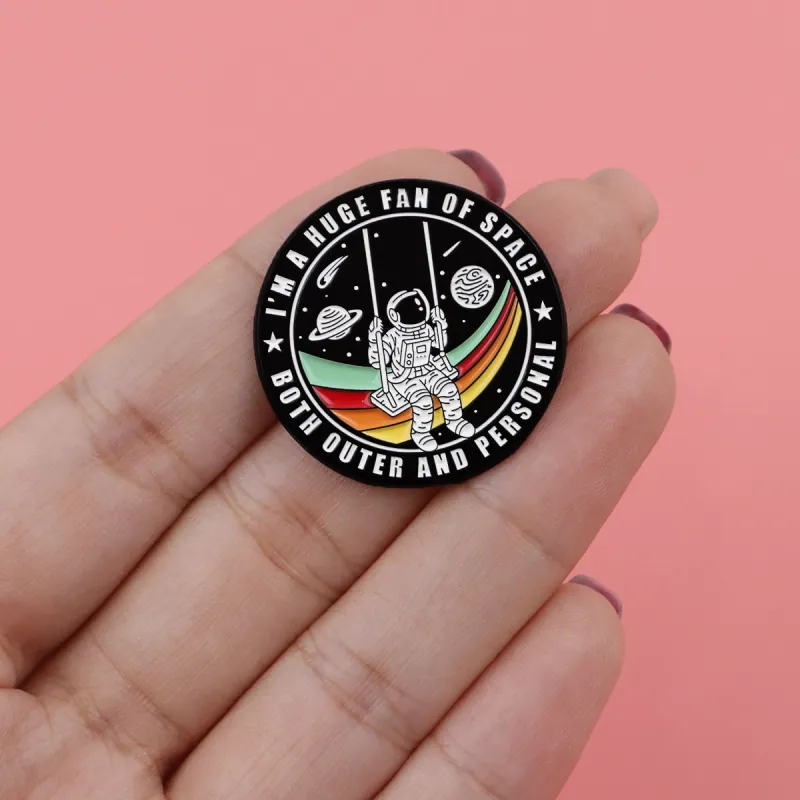
Choosing between hard enamel vs soft enamel pins comes down to one thing you can feel with a fingertip: whether the colour sits flush with the metal or sinks below it. Everything else follows from that, including price, speed, and how the pin ages on a jacket. Both crafts start with stamped or die-struck metal, both can carry your logo, and both take the same backings. The fork in the road is the colouring stage.
Worth saying early: there is no single right answer. A running club ordering a few hundred finisher pins and a heritage brand ordering thousands of retail pins should choose differently, and often do. Here is how each craft works, what it costs you in time and money, and where the middle option fits.
How hard enamel pins are made
Hard enamel (the classic version is cloisonné) begins with a metal base, usually copper in our workshop. Thin metal walls are raised or cut to form small compartments, the cloisons that give cloisonné its name. Colour is not paint. It is a powdered glass-like mixture, hand-filled into each compartment and fired at 1,700 F for two to four minutes. One colour per firing, and that detail matters: firing between colours stops them bleeding into each other, so the border between red and blue stays crisp instead of going muddy.
After the last firing the pin gets hand polishing, which grinds the enamel down level with the metal lines. Run a thumb across a finished hard enamel pin and you feel almost nothing. Metal and colour sit in one smooth plane. Then plating, inspection, individual packing.
What you are buying is vitreous enamel: glass fused to metal. That fusion is why hard enamel pins hold their colour for decades, and why military units and institutions have used the technique for badges that must survive weather, pockets and years of handling. More steps, more skill, more production time. The price reflects all three.
How soft enamel pins are made
Soft enamel takes a similar metal base (copper, bronze, iron or aluminium) and stamps the design so the lines stand up and the colour areas sink down. Durable liquid enamel is hand-filled into those recesses and then baked so the colour sets evenly. Our technical notes record 160 degrees for the bake.
Nobody polishes the surface flat. That is the point. You get raised metal ridges with colour sitting in the valleys between them, which reads as texture and gives the pin a slightly engraved, hand-made feel. The ridges also shield the colour, because the metal takes the rubbing when the pin is worn or handled.
Two practical notes. Soft enamel handles fine detail and 3D relief well, so if your design has sculpted features, a shaped profile or small lettering that has to stay legible, it is a strong fit. And iron is the budget route: the same look as stamped copper or bronze soft enamel at a lower unit price, since iron costs less and needs less polishing and plating time. Ask your supplier which metal you are actually getting, because the difference is easy to hide. A magnet is the quick test. If it sticks, there is iron in the pin.
Imitation hard enamel: the middle path
Also sold as soft cloisonné, Epola or semi-cloisonné, imitation hard enamel is the option most buyers never think to ask for. Colour is a synthetic pigment rather than fired glass, filled by hand and then polished flat, so the finished enamel pin has the smooth, flush look of hard enamel. Copper, bronze, iron and aluminium all work as bases, and the palette is wider than true hard enamel, matched to Pantone.
Where it wins: cost and speed. Fewer firings, less labour, more colour choices. Where it differs: the colour is pigment held in the metal, not glass fused to it, so a trained eye can spot the difference up close. Most people cannot at arm's length on a jacket. Our imitation hard enamel pigments are tested for total lead content against the specification of US CPSIA HR4040. That is a pigment test, not a whole-product certification, so treat it as one data point rather than a full compliance story.
Hard enamel vs soft enamel pins, side by side
| Craft | How colour is applied | Surface feel | Typical base metal | Detail and 3D | Relative cost | Relative production time | Best for |
|---|---|---|---|---|---|---|---|
| Hard enamel | Glass enamel, hand-filled, one firing per colour | Smooth, flush with metal | Copper | Clean shapes and fine lines, not 3D relief | Highest | Longest | Premium retail, long-service awards, pins worn for years |
| Imitation hard enamel | Synthetic pigment, hand-filled, polished flat | Smooth, flush | Copper, bronze, iron, aluminium | Same as hard enamel, wider palette | Mid | Medium | Flat premium look on a tighter budget |
| Soft enamel (stamped copper or bronze) | Liquid enamel hand-filled into recesses, baked | Ridged, colour below the metal | Copper, bronze | Fine detail and 3D relief | Lower | Short | Event giveaways, 3D designs, classic textured look |
| Soft enamel (iron) | Same process, cheaper base | Ridged | Iron | Fine detail and 3D relief | Lowest | Short | High-volume promo where unit price leads |
| Soft enamel with epoxy dome | Soft enamel plus clear resin layer | Smooth glassy dome, raised | Copper, bronze, iron | As soft enamel, glossier finish | Slightly above soft enamel | Short | Heavy handling, outdoor use, printed pins |
Cost and lead time: what actually drives the number
Three things push a pin quote upward: colour count, process steps and metal. Hard enamel hits all three. Every colour is a separate firing, the face is hand-polished, and the base is usually copper. It is the most expensive of the group, and it is also the one buyers most often over-order. You do not need fired glass for a pin that gets worn twice a year.
Soft enamel is the cheapest of the enamel crafts, and iron soft enamel undercuts copper or bronze. Imitation hard enamel sits in the middle: below hard enamel, above plain soft enamel, with the flat finish as your payoff.
Time runs in the same order. Turnaround is never one number here: samples usually take 3-8 days and bulk production 7-15 days depending on the item, with large orders around 15 days. A hard enamel design with eight colours will sit at the long end of that window because of the firings alone, so build the buffer in. If your date is fixed (race day, conference, awards night), tell your supplier the in-hand date, not the order date, and let them pick the craft that fits it. Our full sequence, from artwork to shipping, is laid out on the production process page.
One more money point: moulds. On a reorder of the same design there is no mould fee, and moulds are kept for two years, so the second run costs less than the first. If you want the whole breakdown, read how custom pin cost is built.
The epoxy dome, backings and finishing
Epoxy is a clear resin layer domed over the face of a pin. It does two jobs: it protects the colour underneath and gives a glossy, slightly raised finish. On printed pins it is not optional. On soft enamel it is a choice, and a genuinely mixed one. The dome adds scuff and moisture resistance, and it also adds a plastic-looking sheen that some buyers dislike on a metal pin. Epoxy will also yellow under prolonged UV exposure, so a pin destined for an outdoor sign or a vehicle is not the place for it.
Backings are a separate decision and an underrated one, since most pins are lost through the fastener rather than the face. Butterfly clutches, rubber clutches, safety pins, magnetic backs, each suits a different wearer and a different fabric. There is a full rundown in enamel pin backing types.
Which designs suit which craft
- Premium or retail: hard enamel. If the pin ships in a gift box or sells at a counter, the flush, glassy finish does the talking. Our hard enamel peony badge is the kind of shape this craft handles well.
- Flat look, tighter budget: imitation hard enamel. You keep the smooth finish and gain colour options.
- 3D relief or fine detail: soft enamel. Raised lines and sculpted surfaces are its home ground, like this soft enamel shark badge.
- Big-volume giveaway: iron soft enamel, or printed pins if the artwork has gradients or photographic elements.
- Long service and club membership: hard enamel if the pin is worn weekly for years, imitation hard enamel if it comes out a few times a year.
- Race finishers and event merch: soft enamel, with or without epoxy. Fast, affordable, tough enough.
- Large flat designs or inlaid lights: photo-etched is the economical route, though it stays 2D because the etch is shallow.
Blunt version: if you cannot tell the difference between the two samples in your hand, buy the cheaper one and spend the savings on quantity. If you can tell, you already know which one your customer expects.
How to start an order with us
Yiwu TianYao Craft Co., Ltd. has been making custom metal crafts for over 40 years, and custom lapel pins are one of our core lines. We run our own plating line. Few factories have one, and our QC team checks every order before it leaves the building. Our group works across five manufacturing bases and over 70,000 sq m, and we have cooperated with more than 500 clients.
To get a quote moving, send four things: your artwork, your quantity, your in-hand date, and whether you want the surface flat or ridged. Adobe Illustrator or CorelDRAW files are ideal, with colours specified as Pantone Solid Coated. If you only have a sketch or a photo, send it anyway. Design work is free, and you will see a proof before anything is tooled. There is more guidance in how to design a lapel pin.
Samples usually take 3-8 days. We accept custom orders regardless of size, so a small first run is fine, and reorders on the same design carry no mould fee for two years. Reach us through the contact page, by email at order@ty-gifts.com, or on phone and WhatsApp at +86 181 2281 1289. Sales are online 24 hours and we reply within 8 hours.
Frequently asked questions
Is hard enamel better than soft enamel?
Better at different things. Hard enamel gives a smooth, flush surface and glass-fused colour that holds up for decades, which suits premium retail and long-service awards. Soft enamel gives raised metal lines, deeper texture and better 3D detail at a lower price, which suits event and giveaway pins. Choose by how the pin will be worn and what it must signal, not by which sounds more expensive.
Can I get the hard enamel look for less money?
Yes, ask for imitation hard enamel (also called soft cloisonné, Epola or semi-cloisonné). The pigment is hand-filled and polished flat, so the face looks flush like hard enamel, but it costs less and comes in a wider colour range. Up close, a trained eye can tell it from fired glass enamel.
Does an epoxy dome make a soft enamel pin more durable?
It adds a protective resin layer over the colour, which helps against scuffs and moisture, and it gives a glossy raised finish. It also changes the look, and epoxy can yellow under long UV exposure, so skip it for pins that will live outdoors in direct sun. On printed pins the dome is required, not optional.
What files and colour references should I send with my pin order?
Adobe Illustrator or CorelDRAW artwork is best, with colours specified as Pantone Solid Coated so the factory can match pigment accurately. JPG or PDF files work for a first quote. Include quantity, finished size if you have one, the date you need the pins in hand, and whether you want a flat or ridged surface.